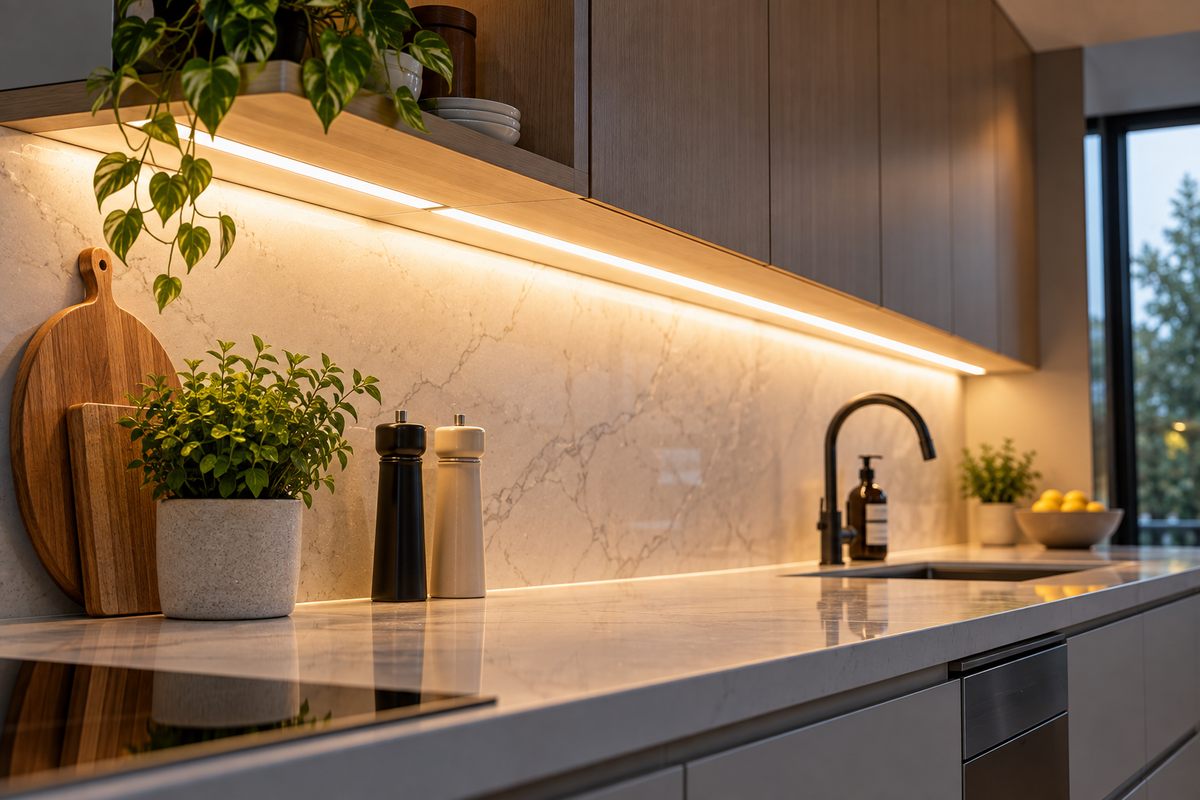
Clean, continuous lines of light can make a significant difference in modern interior design. Whether installed beneath kitchen cabinets, inside display shelves, along walls or around furniture, LED strip lighting often looks more refined when paired with the right aluminum profile.
LightingWill offers a range of LED aluminum channels designed to help organize LED strip installations, provide physical protection and create a more finished lighting appearance.
The LightingWill LED Aluminum Channels collection includes U-shaped profiles, corner-mounted V-shaped channels, bendable designs and different profile sizes in silver and black finishes.
With options for different LED strip widths and diffuser covers, these channels can support a variety of residential, decorative and commercial lighting projects.
Discover LightingWill LED Aluminum Channels
An LED aluminum channel is a metal profile designed to hold an LED strip in a defined position.
Instead of attaching an exposed LED strip directly to a surface, the strip is installed inside an aluminum housing. Depending on the selected model, a diffuser cover can be added to soften the visible light and provide a cleaner finished appearance.
Common applications include:
- Kitchen under-cabinet lighting
- Bookshelf and display cabinet lighting
- Wardrobe and closet illumination
- Furniture accent lighting
- Wall and ceiling lighting
- Stair and step accent lighting
- Retail display lighting
- Architectural decorative lighting
Choosing the correct aluminum channel is important because the profile shape, internal width, diffuser and mounting method all affect the finished installation.
What's Available in the LightingWill Collection?
The current LightingWill collection provides several profile families for different installation requirements.
U-Shaped Aluminum Channels
U-shaped profiles are a common choice for straight LED strip installations on flat surfaces.
LightingWill offers U01, U02, U03, U04, U05 and U06 designs in selected silver and black finishes.
These profiles differ in dimensions, internal widths and overall construction, giving users options for different LED strip sizes and installation spaces.
V-Shaped Corner Channels
V-shaped LED aluminum profiles are designed for corner installations, helping position LED strips at an angle.
Selected LightingWill V01, V02 and V03 models are available in silver and black finishes.
These channels can be useful for cabinet corners, display units and other installations where angled light placement is preferred.
Bendable Aluminum Channels
The Silver U08 is a bendable U-shaped aluminum channel designed for compatible LED strips up to approximately 12mm wide.
It provides an additional option for projects requiring a profile that can follow a suitable curved installation path.
Always check the product instructions and allowable bending conditions before installation.
Compact Aluminum Profiles
The collection also includes compact silver aluminum channel models such as 610-B, 627-B, 524-B, 510-B and 505-B.
These profiles provide different dimensions and internal widths for smaller or more space-sensitive lighting projects.
Step 1: Choose the Right Channel Shape
The first step is to consider where the LED strip will be installed.
U-Shaped Profiles for Straight Installations
U-shaped LED channels are suitable for many flat-surface installations.
They can be used beneath kitchen cabinets, inside shelving systems, along furniture edges and in selected architectural lighting layouts.
The exact mounting method depends on the profile design and available installation accessories.
V-Shaped Profiles for Corners
Corner-mounted V-shaped channels position the LED strip at an angle rather than directing the light straight outward from a flat surface.
This can be useful when installing lighting inside display cabinets or along the junction between two surfaces.
Bendable Profiles for Suitable Curved Layouts
For selected curved lighting layouts, a bendable profile may provide more flexibility than a rigid straight channel.
However, a bendable aluminum channel should not be assumed to support every curve or bending radius.
Step 2: Check LED Strip Width Compatibility
One of the most important measurements is the internal width of the aluminum channel.
LED strips are available in different PCB widths, and not every strip fits every profile.
LightingWill offers selected channels for LED strips up to approximately 12mm wide and wider profiles with approximately 20mm internal widths.
| Profile Model | Listed Profile Size | LED Strip Compatibility |
|---|---|---|
| U01 | 9 × 23mm | Up to approximately 12mm |
| U02 | 9 × 17mm | Up to approximately 12mm |
| U03 | 10 × 30mm | Approximately 20mm internal width |
| U04 | 10 × 23mm | Approximately 20mm internal width |
| U05 | 36 × 24mm | Approximately 20mm internal width |
| U06 | 24 × 24mm | Approximately 20mm internal width |
| U08 | 18 × 6mm | Up to approximately 12mm |
| V01 / V02 | 16 × 16mm | Approximately 12mm internal width |
| V03 | 18 × 18mm | Approximately 12mm internal width |
These dimensions are based on the listed product models. Individual variants should be checked before ordering.
When measuring an LED strip, consider not only the PCB width but also any connectors, solder joints or additional components that may extend beyond the strip edges.
Step 3: Choose Silver or Black Aluminum Profiles
LightingWill offers selected U-shaped and V-shaped profiles in silver and black finishes.
Silver Aluminum Channels
Silver profiles offer a neutral metallic appearance that can work well with aluminum fixtures, light-colored cabinetry and modern furniture.
They are suitable for both visible installations and locations where the profile is partially concealed.
Black Aluminum Channels
Black profiles can coordinate with dark cabinets, black metal shelving and contemporary interior finishes.
They can also create a deliberate contrast against lighter installation surfaces.
The choice between silver and black primarily depends on the intended visual appearance and surrounding materials.
Step 4: Understand LED Diffuser Covers
A diffuser cover changes how the LED strip appears when viewed from outside the channel.
Selected LightingWill profiles are available with clear or milky white diffuser covers.
Clear Diffuser Covers
Clear covers allow more direct visibility of the LED strip and its individual light sources.
They may be suitable for installations where maximizing light transmission is more important than concealing individual LED points.
Milky White Diffuser Covers
Milky white covers diffuse the light and can reduce the visibility of individual LEDs.
This creates a softer and more uniform appearance, particularly when the illuminated profile is directly visible.
However, a diffuser alone does not guarantee a completely dot-free lighting line.
The final appearance also depends on:
- LED density
- Distance between the strip and diffuser
- Profile depth
- Diffuser material and opacity
- Viewing distance
- LED strip construction
Step 5: Consider COB LED Strips for Smoother Lighting
When the goal is a continuous line of light, the LED strip itself is just as important as the aluminum channel.
Traditional SMD LED strips may show individual light points, especially when installed inside shallow profiles.
COB LED strips use densely arranged light-emitting components beneath a continuous coating, producing a more uniform illuminated appearance.
Combining a compatible COB LED strip with an appropriate aluminum profile and diffuser can help create a smoother lighting effect.
For available strip options, explore the LightingWill COB LED Strips collection.
Always confirm the strip's actual width before selecting a channel.
Step 6: Plan Under-Cabinet Lighting
Kitchen cabinets are one of the most practical locations for LED aluminum channels.
LED strips installed beneath upper cabinets can illuminate countertops and work surfaces while keeping the lighting source relatively discreet.
For a clean installation:
- Measure the underside of the cabinet.
- Determine where the lighting should be positioned.
- Select an aluminum profile that fits the available space.
- Choose a compatible LED strip.
- Plan power supply and cable routing.
- Confirm the mounting accessories and diffuser.
- Test the lighting before final installation.
Positioning the channel closer to the front or rear of the cabinet changes where the light falls on the countertop.
Test the lighting position before permanently fixing the profile.
Step 7: Use LED Channels for Shelves and Display Cabinets
LED aluminum profiles are also useful for creating organized lighting inside shelving and display systems.
Common applications include:
- Bookshelves
- Glass display cabinets
- Retail product displays
- Collectible display cases
- Wardrobe shelving
- Entertainment cabinets
- Decorative wall niches
For display cabinets, the location of the LED channel affects both visibility and glare.
A corner-mounted V-shaped channel may be useful when the lighting needs to be directed toward objects from an angled position.
For straight shelf edges, a compatible U-shaped profile may provide a simpler installation.
Step 8: Create Architectural Lighting Lines
LED aluminum channels can help introduce defined lines of illumination into interior spaces.
Depending on the profile and installation conditions, they can be used for wall accents, ceiling details, stairs and other architectural features.
In these applications, the finished appearance depends heavily on accurate alignment and consistent spacing.
Consider:
- Visible profile edges
- Lighting direction
- Surface finish
- Power cable access
- Maintenance requirements
- LED strip replacement access
For recessed or plaster-in installations, select a profile specifically designed for that mounting method rather than assuming any U-shaped channel can be embedded into drywall.
Step 9: Check Installation Accessories
Selected LightingWill aluminum channel kits include diffuser covers, end caps and mounting clips.
However, accessory contents can vary between product models and package options.
Diffuser Covers
These cover the LED strip and help create the intended finished lighting appearance.
End Caps
End caps provide a finished appearance at the ends of compatible profiles.
Mounting Clips
Mounting clips help secure compatible aluminum channels to suitable installation surfaces.
Before ordering, check whether the selected package includes the required mounting accessories.
Also confirm whether LED strips, power supplies and controllers must be purchased separately.
Step 10: Plan Power and Wiring
LED aluminum channels are primarily mounting and housing components. The channel itself does not replace the electrical components needed to operate the LED strip.
A typical low-voltage LED strip installation uses:
AC Power → Compatible LED Power Supply → LED Strip Installed Inside Aluminum Channel
If the selected LED strip requires a controller or dimmer, that equipment must also be incorporated into the system.
Important considerations include:
- LED strip operating voltage
- Power consumption per meter
- Total connected strip length
- Power supply capacity
- Wire size and cable routing
- Voltage drop
- Controller compatibility
- Safe access to connections
Explore the LightingWill LED Power Supplies collection when planning a compatible lighting system.
LED Aluminum Channel Selection Guide
| Project Requirement | Suggested Profile Type | Important Consideration |
|---|---|---|
| Under-cabinet lighting | U-shaped profile | Cabinet clearance and diffuser |
| Display cabinet corner | V-shaped profile | Lighting direction and angle |
| Wide LED strip | Selected 20mm profile | Actual PCB width |
| Standard narrow LED strip | Selected 12mm profile | Connector clearance |
| Curved installation | Bendable U08 | Bending limitations |
| Dark cabinetry | Black aluminum profile | Visual coordination |
| Metallic or light furniture | Silver aluminum profile | Visible profile finish |
| Smoother lighting appearance | Suitable profile with milky diffuser | LED density and profile depth |
| Architectural recessed installation | Recessed-specific profile | Mounting method and surface preparation |
Common Buying Mistakes
Choosing the Wrong Internal Width
Always measure the LED strip before ordering the aluminum channel.
Assuming Every Profile Has the Same Accessories
Check the actual package contents for diffuser covers, end caps and mounting clips.
Expecting Every Diffuser to Eliminate LED Dots
Light uniformity also depends on LED density, profile depth and diffuser characteristics.
Ignoring the Installation Surface
Check whether the profile is appropriate for surface mounting, corner mounting or a specific recessed installation.
Forgetting the Power Supply
Aluminum channels do not power LED strips. Choose a compatible power system separately.
Choosing a Profile Based Only on Appearance
The channel must fit the actual LED strip, available installation space and intended lighting direction.
Not Planning Cable Routing
Determine where wires and connections will be positioned before permanently mounting the profile.
Assuming Aluminum Channels Are Waterproof
An aluminum housing with a diffuser should not automatically be treated as a waterproof assembly. Check the exact product rating and installation requirements for damp or outdoor locations.
Shipping Considerations for Aluminum Channels
LED aluminum profiles may require special shipping arrangements because of their length and packaging requirements.
The LightingWill LED Aluminum Channels series is not eligible for the standard free shipping offer on orders over $399.
Shipping charges are calculated according to the applicable freight requirements.
Review the shipping information on the collection or product page before placing an order, particularly for longer profiles and larger quantities.
Final Checklist
Before choosing an LED aluminum channel, confirm:
- Where will the LED lighting be installed?
- Is a straight, corner or curved profile required?
- What is the actual LED strip width?
- Does the selected profile provide enough internal space?
- Which profile dimensions fit the installation?
- Is a silver or black finish preferred?
- Should the diffuser be clear or milky white?
- Is a smoother lighting appearance important?
- Would a compatible COB LED strip be appropriate?
- Does the mounting surface support the selected profile?
- Are end caps and mounting clips included?
- What power supply does the LED strip require?
- Have wiring and access points been planned?
- Is the selected product suitable for the intended environment?
- Have shipping costs and package quantities been checked?
Conclusion
LED aluminum channels provide a practical way to create cleaner and more organized LED strip installations.
Whether the goal is under-cabinet lighting, shelf illumination, furniture accents or architectural lighting details, selecting the right profile can improve both installation quality and the finished appearance.
The LightingWill collection offers different U-shaped profiles, V-shaped corner channels, bendable options and compact aluminum housings in a range of dimensions and finishes.
For the best results, choose the channel according to the actual LED strip width, mounting position, diffuser preference and complete lighting system requirements.
Explore the LightingWill LED Aluminum Channels collection to compare the available profile shapes, sizes, finishes and installation options for your next lighting project.


Leave a comment
This site is protected by hCaptcha and the hCaptcha Privacy Policy and Terms of Service apply.